Clean drinking water and support for small farms inspire Beth Slocum to vote
By Sarah Horner, MCEA Director of Media Relations and Public Engagement
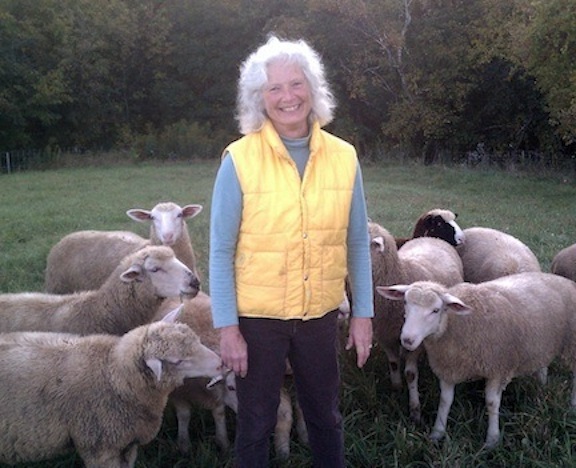
Beth Slocum bought her small sheep farm in Vasa, Minn. “by accident” back in the late 1970s while on strike from her Minneapolis teaching job.
She and her husband have been commuting between their South Minneapolis home and their 20-acre farm in Minnesota's karst region ever since.
Beth recalls passing about 20 dairy farms when she used to drive from Cannon Falls to Red Wing, the two closest cities to Vasa, to restock supplies.
Today, she drives by two.
“When I first bought my farm, there was a bustling farm economy and lots of diversified farms. Now we have a couple boutiques, and that’s about it,” Beth said. “We’ve lost so many small farms, especially the small dairies. It’s been really striking and sad to see the shift in the landscape as corporate farms have taken over. It’s depopulated the countryside.”
Beth will bring concerns about how industrial farming has transformed Minnesota’s towns and harmed the environment to the ballot box in the upcoming midterm elections.
Top of mind is water protection. Overapplication of fertilizer and manure on farms, especially when there are no crops in the ground to absorb them, can contaminate drinking water and groundwater with nitrate pollution. The problem is particularly bad in Minnesota’s karst and central sands regions due to the area’s unique geology.
MCEA and other environmental groups filed a lawsuit in 2025 challenging the state’s handling of the nitrate problem. We settled under an agreement that the Minnesota Pollution Control Agency and the Minnesota Department of Agriculture would review the efficacy of state rules governing manure and fertilizer application. While the MPCA is considering strengthening the rule under its jurisdiction, MDA recently announced that its rule doesn’t need revision. MCEA and our allies plan to appeal.
Nitrate levels at Beth’s farm are so high, three times the federal limit, that they can’t drink the tap water. Instead, they bring water in from the Twin Cities.
State and county officials have visited the farm and laid out options to treat her water, but each presented other obstacles.
“That thing that is really frustrating is that it doesn’t seem like any of them are thinking about the broader perspective. They tell you they’ll help you buy water or drill a new well, but they aren’t addressing the problem,” Beth said. “It’s just band-aid after band-aid.”
Solutions exist, Beth said, adding that a growing network of smaller farmers is adopting them, especially among those with access to incentive programs that pay farmers to farm more sustainably.
Beth and her husband use managed rotational grazing to encourage regrowth while feeding the dozen to 16 lambs they raise on their property at any given time. They also use cover crops that absorb runoff whenever they do need to apply commercial fertilizer.
She hopes the next class of legislators voted in this fall will finally start to rein in harmful industrial ag practices and do more to support small and mid-sized farms.
The short list of legislation she’d like to see pass?
- Regulating the use of synthetic fertilizer in the fall unless cover crops are planted
- More incentive-based programs that make it more financially feasible for farmers to adopt sustainable farming
- Mandatory environmental impact statements (EIS’s) for any attempt to expand an animal feedlot to more than 800 animal units
- Mandatory water testing in every county so residents know what’s in their water
She hopes such changes will make it easier for more people to return to small farming, a practice she describes as both an honor and responsibility.
“When I first bought this farm, I just felt this connection to the land and the kind of spirit of it, I guess,” Beth said. “This is going to sound corny, but I really see it as my job to take care of it, in the same way it’s my job to take care of my sheep.”