Legacy giving, naming an organization in your will or estate plan, is one of the most powerful ways to protect Minnesota's environment for generations to come. MCEA's White Pine Legacy Circle is built on that idea, and the people who've joined it know that long-term commitment is the best way they can stay in the fight for the long haul.
What drew Ron Sternal to MCEA, and what still holds him, are the ways he sees the organization create real, systemic change for Minnesota. There are many ways to help stand up for our environment, but MCEA has a special niche. The organization doesn't just send letters to politicians to politely ask for better protections, it shapes the law. It doesn’t paint protest signs, it’s ready to sue if companies don’t follow those laws. "They’ll take you to court and say, ‘Hey, what you're doing is wrong. You’ve got to cut it out,’” Ron says. “That to me is powerful."
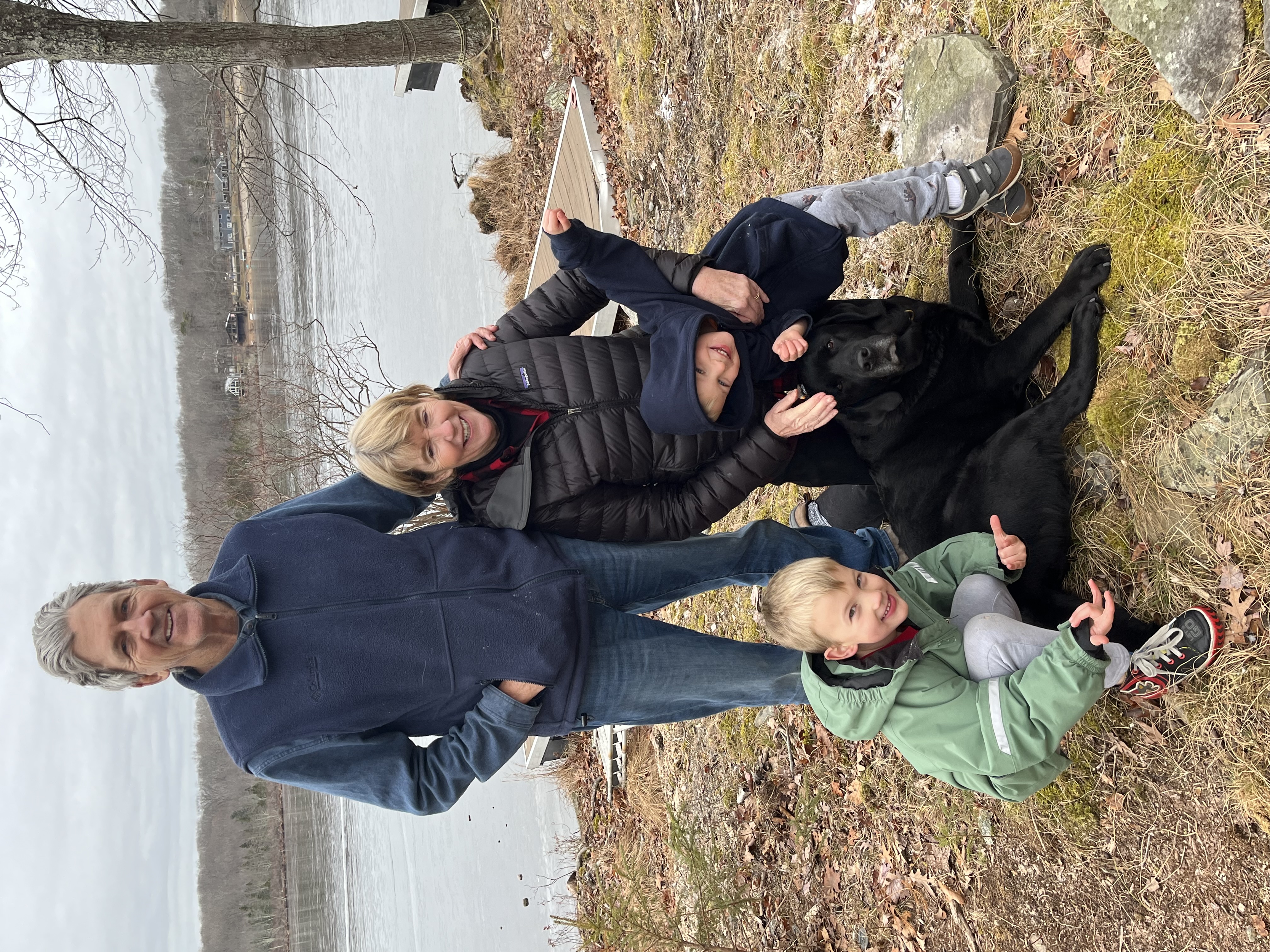
In 2014, he joined the board of the organization after providing legislative testimony against a speculative sulfide mining proposal called PolyMet. He was approached by other people who testified that day, knowing if the mine moved forward it would be a bad deal for Minnesotans. They also knew it would be a long fight to keep our waters protected and people like Ron would make the difference. More than twelve years later, although he’s finished his board term, he is still finding new ways to stand up for MCEA and the future of our shared environment.
The fights that MCEA takes on are not the kind that resolve in a news cycle or a single legislative session, they’re complicated, technical, and often take decades. No one wants to take on the tough work of protecting Minnesota’s drinking water from agricultural pollution, but MCEA is rolling up its sleeves. The infrastructure we need to combat the climate crisis is always at risk, and MCEA is its champion at the utilities commission. When toxic chemicals are in thousands of products in the state, MCEA is ready to tell decision makers it’s time to make a change, even when lobbyists fly from across the country to protect their own corporate interests.
And the threats to our watersheds are not going away as long as the minerals are still in the ground and there are companies willing to spend money to pursue them. "They are very good at wearing the opposition down," Ron says of the mining industry. "Their corporate strategy is absolutely that, and they're good at it, and they win more often than not."
The only real counter to that is an organization with enough staying power to keep fighting regardless of who is in office, what the courts decide this year, or which way the political wind is blowing. "If it weren't for MCEA, PolyMet probably would have gone forward," Ron says. "I have no question about that." Sustaining that kind of impact requires money that doesn't dry up.
White Pine Society - MCEA's Counterweight to Corporate Staying Power
That’s where MCEA's White Pine Legacy Circle comes in. It’s a giving option that allows people to support Minnesota’s environment and future generations through their estate planning. The number of people who have named MCEA as a beneficiary is growing, but Ron thinks that the number should be in the thousands.
Ron gives generously to support MCEA’s work right now, but there are limits to what any person can give while balancing the needs and opportunities of life. But as Ron says, "When I no longer need money, that’s when I can really be generous." Legacy giving is the chance to make a gift that wouldn't be possible any other way. Ron’s made a lot of investments in his life, but he knows this is one of the most important.
He also knows that there are people who care deeply about Minnesota’s environment, but don't have the income to write large checks year after year. Teachers. Public employees. People who've spent their careers in service rather than accumulation. He says their gifts could be transformative for an organization like MCEA. His wife Nancy watched it happen at a nonprofit she supports, when a retired schoolteacher, left behind half a million dollars. Nobody knew it was coming.
"When people die, they're not leaving money to mining companies," Ron says. "But we can leave our money to MCEA to fight those mining companies, and their inexhaustible resources, for decades to come."
Ron has seen what happens when states don’t have organizations like MCEA. He hates to imagine Minnesota looking more like Iowa, where there isn't a river or a lake that hasn't been touched by agricultural runoff, and where people drive north to our boundary waters to experience what they once had at home.
He grew up going to the lake, catching bass in the river, and bringing them home for his mother to cook. He doesn't think he would do that today, not from the Mississippi River, but he knows that can change. He also knows it will take time and work to make the change happen. He thinks about the Boundary Waters and dipping a cup in and drinking straight from it. He wonders whether future generations will have that. He wants to make sure his legacy will be a part of fighting for the world he wants to see, even when he’s not in it anymore.
"There is no other organization that will continue into perpetuity to fight for our environment in Minnesota like MCEA will," Ron says. Joining the White Pine Legacy Circle is a way to match that commitment.
For more information on joining the White Pine Legacy Circle, contact MCEA Advancement Officer Debra deNoyelles.