Status
Active
The East Phillips community has been fighting for cleaner air and a more just future for its residents for decades. In 2021, it invited MCEA to join the effort after learning that the City of Minneapolis aimed to build another polluting development on a former manufacturing site in the neighborhood, which consistently ranks among the state's worst for air quality.
The City’s plan was to build a new public works campus on the site, with office buildings, a diesel refueling station, and parking lots to store its public works fleet. The proposal conflicted with the East Phillips Neighborhood Institute’s (EPNI) vision: converting the former Roof Depot building on the site into an urban farm that would bring jobs, clean energy, and sustainable agriculture to the community.
East Phillips has long been home to an unjust concentration of polluting industry and facilities, including the Smith Foundry and an insecticide manufacturer that polluted the neighborhood with arsenic for decades, requiring a massive superfund cleanup of contaminated residential yards.
EPNI’s urban farm proposal represented a cleaner future for the neighborhood that residents supported.
MCEA joined EPNI’s coalition and led the filing of a detailed and lengthy public comment on the city’s public works proposal as it moved through the state’s environmental review process. We pointed out the plan’s failure to address key environmental effects, climate change, or to consider the heavy pollution burden already present in East Phillips. We also held community meetings to help residents submit their own comments. MCEA’s comment drew media attention and helped raise public awareness about the problems with the City’s plan.
Two years later, after continued advocacy, lobbying, and a decade of community organizing, EPNI received state funding to buy a portion of the Roof Depot site. It was a massive victory for the community that MCEA was proud to support.
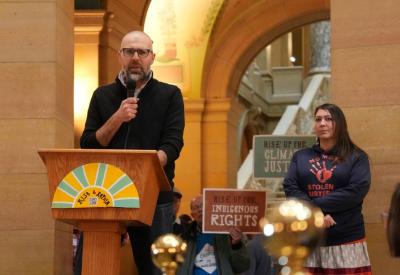
(Insert page break and East Phillips community photo)
We stood alongside the East Phillips Community again as it pushed for the closure of the Smith Foundry after decades of organizing that intensified following a surprise 2023 Environmental Protection Agency inspection. The inspection revealed uncontrolled dust, broken air pollution control equipment, and years of air quality violations at the foundry.
As part of a coalition led by East Phillips residents, MCEA’s team of experts requested and reviewed documents from the state about the foundry’s operations and shared summaries and key findings from the long and complicated reports with the coalition. One of our findings was that the foundry’s furnace and casting process were continually emitting “uncontrolled” soot and heavy metal fumes into the community.
An intense public pressure campaign led by East Phillips’ residents followed. A year later, in late July of 2024, Smith Foundry announced plans to close following a settlement agreement reached with the EPA.
The foundry closed for good in August 2024, ending more than a century of air pollution from its smokestack in the neighborhood.
East Philips’ urban farm and Smith Foundry wins are examples of what can be achieved through community-led coalitions and decades of determination, strategy, and action.
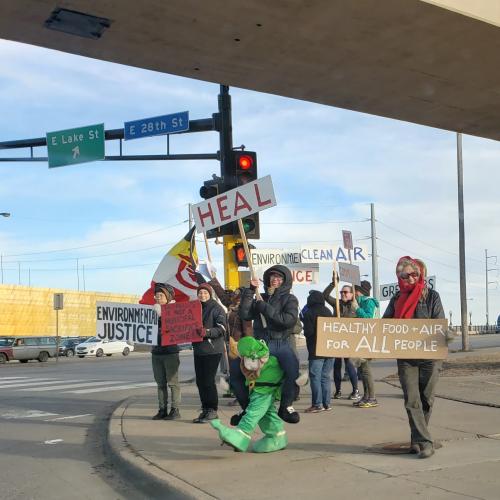
As a neighborhood that is 83% Black, Indigenous, and people of color, the East Phillips community would be expected to bear the brunt of the impact for the “greater good,” which is an unacceptable trade-off. Racism has recently been declared a public health emergency in Minneapolis.
- Letter from Erin Niehoff in MinnPost, joined and signed by MCEA
Key Timeline Events
May 2026
EPNI strikes deal with City to share Roof Depot site
Under the terms of the deal, EPNI will complete the purchase of the southern half of the site for $6.2 million and begin converting its parcel into an urban farm. The City’s plans for the northern half of the site remain in development.
September 2024
Council extends deadline for securing funding by one year
Minneapolis City Council, with Minneapolis Mayor’s support, extend the deadline for EPNI to raise $11.4 million to purchase the land for the Urban Farm for one year to September 2025.
July 2024
Smith Foundry announces plans to cease operations in August 2024
The facility’s closure ends over a century of pollution caused by the foundry.
July 2024
EPA announces settlement agreement with Smith Foundry stipulating closure of foundry’s metal melting furnace in 12 months
The settlement was reached just over a year after the EPA found several Clean Air Act violations at the facility during a surprise inspection
June 2023
Capital Campaign begins for additional funding
May 2023
Surprise EPA inspection reveals years of air qualification violations at Smith Foundry in East Phillips, reinvigorating community-led campaign to shutter smokestack
The inspection revealed uncontrolled dust, broken air pollution control equipment and air pollution violations dating back to 2018. The findings reignite a longstanding community fight to shut down the polluting facility. EPNI asks MCEA to support the effort by requesting and interpreting legal documents about the foundry’s operations.
May 2023
EPNI receives funding from state legislature
During the last days of the 2023 legislative session, EPNI receives funding to buy the Roof Depot site. $4.5 million in the capital investment bill is allocated for the city to relocate a proposed public works facility away from the Roof Depot site. Another $2 million in the bill is dedicated towards the purchase of the site. The community group raises the additional $3.7 million from investors.
March - May 2023
MCEA staff lobby legislators in support of the appropriation
Amidst a landmark legislative session, MCEA staff dedicate time to continuing lobby efforts for state funding to realize the community-led vision of the roof depot site.
April 2023
EPNI hosts an Earth Day rally
MCEA Healthy Communities Program director, Evan Mulholland attends and speaks in a show of support. The rally connects the work being done for the EPNI farm to national and global movements for environmental justice and land sovereignty.
April 2023
City flags willingness to sell Roof Depot site to EPNI
Meetings between EPNI, state legislators, and Mayor’s office results in a public statement from the City of the Administration’s willingness to sell the site and support the legislative appropriation of funds.
March 2023
EPNI funding begins journey in the state legislature
Public hearing on appropriations bills to fund EPNI’s purchase of the roof depot property for the indoor urban farm. MCEA staff attend for solidarity and provide administrative support.
February 2023
Appeal stays building demolition
EPNI’s MERA case was denied. EPNI appeals the decision. The court stayed demolition of the building through an indefinite injunction, allowing time for the court of appeals to schedule a hearing for EPNI's appeal.
Feb 23, 2023
Native-led occupation of roof depot site, forcibly broken up by police
On February 21st, a peaceful occupation of the Roof Depot site in protest of the demolition and imminent community harm was broken up by dozens of police officers.
January 2023
City Council votes to move ahead with demolition despite community opposition
City council votes 7-6 to award $1.6 million dollar demolition contract to Rachel Contracting to tear down the Roof Depot building. Demolition slated to begin in March, 2023.
September 2022
EPNI and East Phillips community finds proposed compromise doesn't meet their needs
The City offers to split off a small portion of the Roof Depot land parcel for the Urban Farm. However, the agreement does not mitigate the additional pollution and traffic in the neighborhood from the Water Works facility.
June - August, 2022
Ongoing negotiations don’t meet community needs
Negotiations continue between City Council, Mayor, and EPNI to find a compromise agreement to accommodate both City plans and EPNI’s need for a community space without further pollution in the neighborhood.
March 2022
Mayor Frey Vetoes City Council
One day after the City Council voted to explore community development of the Roof Depot site, Mayor Jacob Frey exercised his veto power to stymie the Council's decision. Mayor Frey explained he would allow community development to proceed if certain preconditions are met. Community leaders respond by requesting a sit down with the Mayor to find common ground to facilitate a community-led development of the disputed site.
March 2022
New-Look City Council Again Votes to Suspend Hiawatha Expansion
The newly elected City Council voted 8-5 to again suspend the Hiawatha Expansion to allow further study for conveying the land for community development. The approved measure tasks the City to explore options for developing the property in partnership with community stakeholders, and sets a June 30, 2022 deadline for formal proposals to be submitted.
September 2021
Minneapolis City Council Flip Flops and Resumes Modified Expansion Project
In a surprise 7-6 vote, the Minneapolis City Council reversed course and elected to proceed with a slimmed down version of the Hiawatha Campus Expansion. Rather than develop the entire site, the Council voted to set aside 3 acres for community development and to initiate an engagement plan with community stakeholders including the East Phillips Neighborhood Institute.
August 2021
City of Minneapolis POGO Committee suspends Hiawatha Expansion
In a 7-6 vote, the Minneapolis City Council partially approved a staff directive led by Cano, Jenkins, Gordan, and Johnson to "suspend all aspects of the City of Minneapolis' proposed Hiawatha Campus Expansion." The motion included a section to grant EPNI exclusive development rights to the 7.5 acre site, but that section failed on a 6-6-1 vote. In a separate vote, the City Council approved the EAW by a 12-1 vote. The Council will finalize the Staff Directive on September 9th.
August 5, 2021
City Council Discusses the Future of the Roof Depot Site
Today, the City Council debated the future of the Roof Depot site, with council members, Cano, Jenkins, Gordon, and Johnson voicing support for the East Phillips Neighborhood Institute-led vision that will add value - and not more pollution - to the East Phillips Neighborhood. The full council debated the financial implications of moving the municipal development elsewhere, and deferred any further action on the development to the Council's Policy & Government Oversight Committee, who will pick-up the debate at its August 18, 2021 meeting.
August 1, 2021
East Phillips Neighborhood Institute rally to call for environmental justice
Residents and activists gather at Longfellow & 28th St. to demand the City make meaningful progress on environmental injustice and stop the development of the Hiawatha Campus Expansion Project in favor of a community-led vision.
Summer 2021
Support for Community-Led Development Continues to Grow
The East Phillips Neighborhood Institute obtains additional key support from state lawmakers Omah Fateh, Patricia Torres-Ray, and Hodan Hassan. The neighborhood group has also been working with the University of Minnesota Law School to develop a business model to facilitate community ownership in the proposed development.
May 7, 2021
U.S. Rep. Ilhan Omar declares support for East Phillips Urban Farm concept
In a letter sent to the East Phillips Neighborhood Institute, U.S. Rep. Ilhan Omar declares support for the community's group's urban farm concept for the Roof Depot site. The City-owned site is currently slated to be developed into a large public works maintenance facility and three-story parking garage, though the City recently put that plan on hold until August 5. If implemented in its place, EPNI's vision, which includes an urban farm, coffee shop, market and affordable housing, would help "address many of the core issues of injustice present" in the majority BIPOC and financially disadvantaged neighborhood, Omar wrote in the letter, which was posted on EPNI's Facebook page.
May 4, 2021
Minneapolis City Council postpones EAW vote until August
The Minneapolis City Council postponed the vote on the Environmental Assessment Worksheet conducted on the City's staff-led public works Hiawatha Expansion project proposed for the Roof Depot site in East Phillips until August. The delay is in alignment with the City's earlier vote to temporarily suspend all activity on the project so that city-staff can work with East Phillips residents on the development of an alternative, community-based vision for the Roof Depot site. The delay gives the commmunity more time to bolster support for the East Phillips Neighborhood Institute's innovative and sustainable urban farm and community center proposal.
April 30, 2021
Minneapolis City Council approves suspension of public works project at Roof Depot site
In a major victory for East Phillips' community members, the Minneapolis City Council passed a resolution to suspend work on the City staff-led Hiawatha Expansion project proposed for the neighborhood's Roof Depot site until August 5. The resolution directs city staff to use that time to research the financial impacts of relocating the project to a more suitable ward, and to simultaneously work with East Phillips residents to develop an alternative, community-based vision for the Roof Depot site.
March 2021
MCEA files response to City of Minneapolis' EAW
MCEA staff filed a roughly 200 page response to the City's EAW. The response points out the EAW's failure to address key environmental effects, climate change and the impacts its proposal would have on existing pollution in East Phillips. It also highlights the city's failure to consider the environmental racism East Phillips has endured for decades.
February, 2021
City Council receives a record amount of comments against the demolition of the Roof Depot
MCEA staff provide online training sessions through Zoom to assist community members in understanding the EAW and how to provide comments. MCEA online action contributes to over 1000 comments received by the City on the EAW.
February 2021
Minneapolis completes Environmental Assessment Worksheet on proposal
The City of Minneapolis published its Environmental Assessment Worksheet (EAW) on its public works consolidation plans for the Roof Depot site. MCEA staff, alongside other experts, carefully reviewed the 1,000 page document to prepare a response.
2020
Environmental review proposed after site cleanup completed
City of Minneapolis completes environmental remediation work on the former Roof Depot site. City engages a consultant to prepare the Environmental Assessment Worksheet.
2019
Residential cleanup completed
U.S. EPA proposes a “partial deletion” of the residential cleanup Superfund site after completing remediation activities.
2017-2018
City adopts master plan for Roof Depot site
City completes project design and holds community meetings. The community urges the City to adopt a plan that allows for non-municipal use, but the adopted master plan does not provide this opportunity.
2016
Roof Depot site purchased by City of Minneapolis
The City acquires the Roof Depot site for $6.8 million, with the main goal to “relocate water distribution employees and operations to one central site.”
2015
Hiawatha Campus proposed, opposition grows
The City of Minneapolis begins negotiating with the owner of the Roof Depot with the eventual plan of relocating part of its public works department to the site. Around this time, community opposition grows. Neighborhood groups, such as the East Phillips Neighborhood Institute, seek to use the Roof Depot site for developing economic opportunities for the community. Visions include an indoor farm and a bicycle shop.
2008
Environmental justice legislation passes
Rep. Karen Clark proposes and the Minnesota Legislature passes a law requiring cumulative and past pollution be analyzed in the vicinity of the CMC Site before the Minnesota Pollution Control Agency can issue a permit.
2006
Residential contamination becomes Superfund site
US Environmental Protection Agency proposes the residential area surrounding the CMC site as a federal Superfund National Priority List site and dozens of yards are cleaned up in the surrounding area between 2008 and 2018.
2005
CMC site redeveloped
Hiawatha Business Center is built on the CMC site after cleanup is completed.
Early 2000's
Residential contamination uncovered
Testing of residential yards reveals widespread arsenic contamination in East Phillips and surrounding neighborhoods from the CMC site. Subsequent followup testing reveals that dozens of residential yards in East Phillips pose an acute risk to human health.
1996
Cleanup of the CMC site by the Minnesota Pollution Control Agency begins
1994
Site contamination uncovered by road construction
The Minnesota Department of Transportation (MnDOT) discovered the arsenic contamination at the CMC Site in 1994 when investigating the Hiawatha Avenue corridor for reconstruction.
1968
Arsenic liquid spilled on site
A storage tank containing liquid sodium arsenite ruptures at the CMC Site, releasing approximately 3,000 gallons of liquid sodium arsenite onto an area of approximately 1,000 square meters.
1930’s to 1962
Insecticide factory pollutes surrounding neighborhoods with arsenic
Open air conveyor belts used to offload arsenic powder allow arsenic dust to be blown off-site into the surrounding neighborhood. The site is operated by a number of companies throughout the years, and becomes known as the CMC Heartland site.