Minnesota’s largest animal feedlot wants to double in size. What’s at stake for our water, climate, and communities
By Jay Eidsness, MCEA Supervising Attorney
Close your eyes and picture a Minnesota dairy farm. What do you see? For many, a bucolic scene with a red barn next to a fenced-in enclosure where a handful of spotted cows munch on grass probably comes to mind. While dairy operations like this still exist, small farms like the one you may have envisioned are quickly becoming relics of the past. Consolidation in the dairy industry has driven many of Minnesota’s small farms out of business, leaving in their place industrial-sized operations where cows and other livestock are confined in warehouse-like barns.
The change hasn’t just affected small farm owners or the quality of life for the animals; it’s also had profound effects on our water and climate. Runoff from animal manure contaminates rivers, streams, lakes, and groundwater with nitrogen pollution, and methane emissions from these large facilities pose significantly greater risks to the changing climate than carbon dioxide. These industrial agricultural practices also degrade soil, reducing its ability to store carbon.
The problem is poised to worsen in Minnesota.
Riverview, LLP, the state’s largest dairy operator, has submitted plans to greatly expand its hoofprint. If approved by state regulators, Riverview’s West River Dairy, located just outside of Morris, would more than double in size, creating the largest large-animal feedlot in state history. The proposal seeks to cram nearly 18,000 cows in confined warehouse-like structures that would concentrate massive amounts of pollution in a region already saturated with manure and impaired waterways. The operation would also tighten Riverview’s grip on Minnesota’s dairy market, making it even more difficult for small and mid-sized operations to compete.
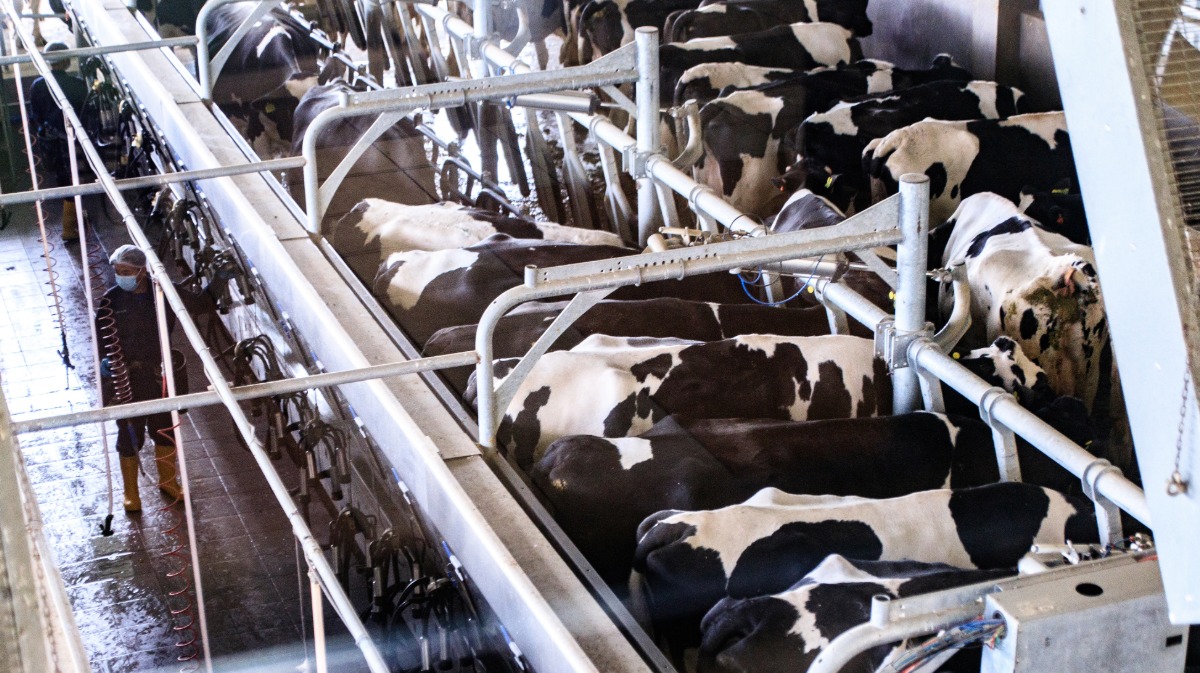
Perhaps most alarming are the expansion’s potential consequences for our climate. If constructed, Riverview’s feedlot would emit more greenhouse gases than some gas-fired power plants and municipal incinerators. That’s a significant jump in climate emissions at a time when Minnesota is already off-track to meet our climate goals of reducing greenhouse emissions 50 percent by 2030 and achieving net-zero by 2050. The fact is that the agricultural sector, which contributes nearly 25 percent of the state’s annual greenhouse gas emissions, has been a major reason Minnesota is not making enough progress on those aims. That’s because, as emissions have fallen in other parts of Minnesota’s economy over the past decade, like transportation and electricity generation, emissions from agriculture have hardly budged. It is not hard to understand why. While smart, science-supported regulations have driven innovation, accelerated the transition to carbon-free electricity, and improved the efficiency of our vehicles, the agricultural sector remains largely unregulated.
If Minnesota is serious about meeting its climate targets, we must start adopting common-sense, data-backed regulations to push the kind of progress we know is possible and we urgently need in the agricultural sector as well.
This is why MCEA and other concerned organizations like the Land Stewardship Project, FarmSTAND, and Food & Water Watch are making the case to the Minnesota Pollution Control Agency that an Environmental Impact Statement - the state’s most rigorous environmental review - must be completed before determining whether Riverview should be permitted to expand. This hyperscale-sized farm would be a first in Minnesota, and the state should ensure that all impacts that come with an operation of this size are considered before it is built.
For years, MCEA has been working with our agricultural partners and regulators to strike an appropriate balance between environmental conservation and agricultural production. Riverview’s expansion proposal presents an opportunity to regulate these large pollution sources more holistically, to ensure that manure does not leach into nearby waterways or affect drinking water supplies, and to consider ways to better manage livestock and land to protect our climate.
You can join us by writing to the Minnesota Pollution Control Agency on or before May 7. Take two minutes, and tell the state that Riverview must complete an environmental impact statement before it is allowed to construct the largest dairy feedlot in Minnesota history.
Our water, climate, and communities are counting on us.