MCEA's 2026 Legislative Recap
By Ben Olson, MCEA Legislative Director
Minnesota’s Legislative session ended on time Monday, May 18th. With divided chambers and all 201 seats in the Legislature up for re-election, it was a tough year to pass proactive legislation like the environmental protections that MCEA, our coalition partners, and all of you worked hard to champion. That said, the Legislature did manage to meet the tepid expectations it set for itself at the session's outset. Here are the four agenda items they passed that support our environment.
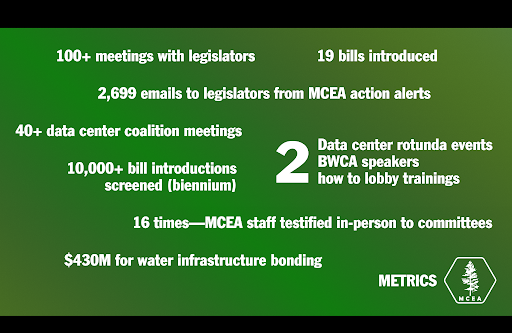
- A $1.2b bonding bill, including $430 million for water infrastructure projects in every corner of the state to improve water quality at the tap.
- Approved project funding from dedicated lottery and legacy funds, including community grants. The recommendations from the Environment and Natural Resources Trust Fund (ENRTF) and the Lessard-Sams Outdoor Heritage Fund (LSOHF), which collectively include nearly $300 million in funding for a host of water conservation, wildlife management, public education, and environmental resiliency projects.
- A tax bill that includes a provision to improve how the Sustainable Aviation Fuel (SAF) tax credit is administered by tying the credits to a carbon intensity score, as well as funding for a study on lifting Minnesota’s nuclear moratorium. Current law prohibits the construction of new nuclear power plants in the state.
-
A ban on hydraulic fracturing (commonly referred to as fracking) for gas exploration and development (e.g., helium and hydrogen) was passed in the Health and Human Services omnibus bill!
SETTING MINNESOTA’S ENVIRONMENT UP FOR SUCCESS IN 2027
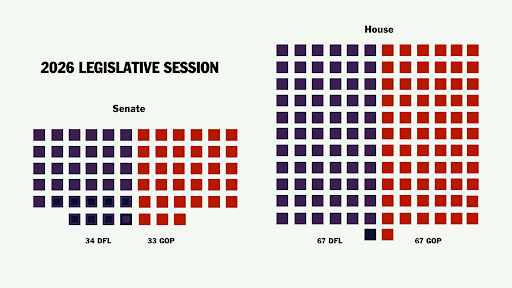
Heading into the session with the most evenly divided legislature in the country – Minnesota currently has a tied House and a one-vote DFL majority in the Senate – we knew the odds of passing new environmental protections this session were long. That didn’t hold us back. We used the time to build the relationships and awareness needed to support the ambitious agenda we intend to advance in 2027, when the Minnesota Legislature will look very different.
Here are five issues that took steps forward this session:
- Data Centers: MCEA supported several bills related to hyperscale data center development this session, including one that would have banned local elected officials from signing non-disclosure agreements (NDAs) with developers. That bill passed the Senate with bipartisan support, but was blocked in the tied House. The bill to impose a statewide moratorium on data-center development until Minnesota has a regulatory framework in place was widely and heatedly discussed among legislators but was never put to a vote.
- Water protections: A bill aimed at better protecting Minnesota’s water supply by requiring large-volume industrial water users to get their own permit from the Department of Natural Resources rather than hide behind municipal water permits advanced in both the House and Senate, but wasn’t able to cross the finish line this session.
- Climate Accountability: A bill to create a Climate Superfund to make big fossil-fuel polluters pay for the climate damage they knowingly inflicted on Minnesota was introduced, widely covered by the press, and debated on the House floor.
- Electronics Recycling: An E-waste bill that would make manufacturers responsible for recycling the batteries and battery-containing products they produce at the end of their life cycle once again passed in the Senate. A more limited version of the bill that would have focused on loose battery recycling remained in play up until the very end of session before being dropped in the final days.
-
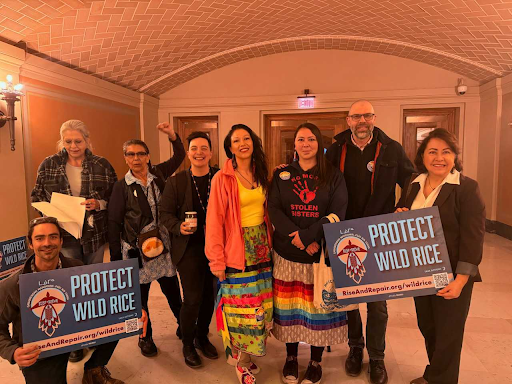
Wild Rice protections: A package of bills aimed at better protecting wild rice in Minnesota achieved committee hearings in both the House and Senate, but ultimately, none of the bills made it to the Governor. The threats to this critical natural and cultural resource are better understood after this session and are poised for greater success next year, as MCEA’s work within the Rise and Repair Alliance continues.
A LAST-MINUTE DEFENSIVE WIN
MCEA has been called to defend the landmark climate, PFAS, and environmental justice legislation passed during the 2023-2024 biennium. We had to react quickly when a last-minute ‘deal’ to delay PFAS reporting was blocked after MCEA and Clean Water Action Minnesota spent the weekend organizing a public response and talking with legislators. Michael Strande, the father of Amara Strande, who died of cancer while pushing for the PFAS ban, once again played an important role in defending the law named after his daughter. As a result, there will be no delay in the PFAS reporting deadline in statute, and all products made after 2023 must disclose any PFAS in their products to state agencies on the original timeline. Hundreds of you took action with us to achieve that defensive win; thank you!
THE SESSION’S OVER, THE WORK CONTINUES
We need your engagement to continue post-session. The summer is a great time to talk to your legislators running for reelection, or to candidates seeking one of the 43 open legislative seats. As rollbacks to federal environmental and climate protections continue, state action is critical. Let your elected officials or the candidates vying to represent you know that you are still expecting statewide action to protect Minnesotans and our natural resources from hyper-scale data centers. Tell them you want to see them step up to protect our water from the growing threats posed by sulfide mining, industrial agriculture, and toxic chemicals that endanger our public health, such as PFAS and nitrate pollution. Let them know that Minnesota can’t waver on climate action or its commitments to ensure people across the state, regardless of zip code, have access to clean air, water, and green space. Build relationships for the long-term!
Your voice matters — make it heard this summer and fall, so that when legislators return to session, they come back knowing that Minnesotans are invested in improving the health of our communities. MCEA will be doing the same.